
When a New Filter Doesn’t Fix Weak Air Flow From Vents in House
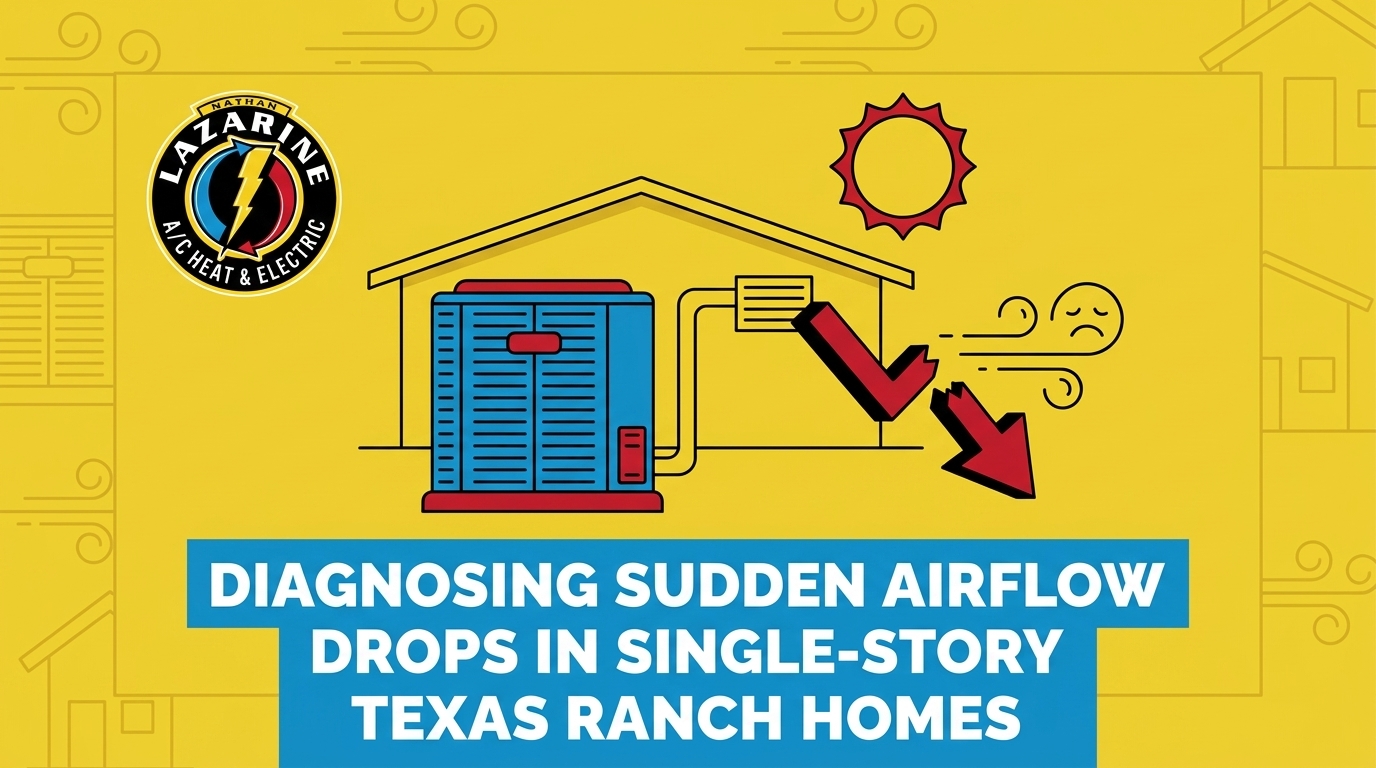
You walk into your living room on a warm afternoon and notice the air feels completely stagnant, even though the system is running loudly in the background. Diagnosing sudden airflow drops in single-story Texas ranch homes usually starts with a simple, logical step: checking the air filter. You pull out the old filter, slide a fresh one into the return grille, and wait for the house to cool down. An hour later, the blower motor is still humming along, but you are still experiencing weak air flow from vents in house. The problem hasn’t gone away.
This is a frustrating moment for any homeowner. Generic online advice almost always points to dirty filters or blocked registers as the primary culprits for restricted airflow. While regular filter changes are a standard part of home maintenance, at Nathan Lazarine A/C Heat & Electric, our team frequently discovers that a sudden and severe pressure drop indicates a much deeper structural issue. If your system sounds like it is working hard but barely a breeze is making it into your living space, the root cause is likely hidden directly above your ceiling.
For many Missouri City single-story ranch homes, expansive attic layouts create unique vulnerabilities for residential ductwork. Because the entire duct system is spread horizontally across a massive, unconditioned space, it is exposed to extreme environmental stress year after year. Finding the true source of your airflow problem requires looking beyond the thermostat and the filter housing. If you are struggling to keep your home comfortable, getting a professional evaluation from our experienced technicians is the first step toward reliable AC repair.
Understanding the Vulnerability of Older Flex Ductwork
To understand why your vents suddenly stopped blowing air, you first need to understand how the air travels from your central unit to your living room. In residential construction, flexible ductwork has been the standard for decades. It is cost-effective, relatively easy to install, and can be routed effortlessly around roof trusses, plumbing lines, and electrical wiring in tight attic spaces.
However, this flexibility comes with a trade-off in long-term durability. Based on what we see during our daily service calls, older flex ductwork is highly susceptible to structural degradation over time. Unlike rigid metal ducts, flexible ducts rely entirely on thin, pliable materials to maintain their shape and guide the conditioned air. When these materials begin to break down, the structural integrity of the entire air distribution system is compromised.
The Three-Tier Anatomy of Flex Ducts
Flexible ductwork is not just a simple tube; it is an engineered product made of three distinct layers. Each layer serves a specific purpose, and the failure of just one can disrupt your entire HVAC system. A standard flex duct consists of:
- The Inner Plastic Liner: This is the core of the duct. It is a thin, flexible plastic sleeve reinforced with a coiled metal wire helix. This liner acts as the actual pathway for the air, and its smooth surface is designed to minimize friction as air travels to your vents.
- The Fiberglass Insulation Layer: Wrapping around the inner liner is a thick layer of fiberglass insulation. This layer prevents thermal loss, ensuring that the cold air produced by your air conditioner doesn’t warm up as it travels through a hot attic.
- The Outer Vapor Barrier: The outermost layer is a durable plastic or foil jacket. This barrier protects the insulation from moisture and physical damage while holding the entire assembly together.
Lifespan and Material Degradation
Industry standards from organizations like ASHRAE indicate that flexible ductwork has a finite lifespan, typically ranging from 15 to 25 years depending on environmental conditions. As these materials age, they undergo a process of chemical and physical degradation. The constant cycling of air pressure takes a toll, but the most significant damage happens at a microscopic level to the plastics used in the assembly.
The inner plastic liner is particularly vulnerable. Over the years, the plasticizers that give the liner its flexibility begin to evaporate and break down. What was once a pliable, resilient material becomes increasingly brittle and fragile. When this inner core begins to fail, the entire duct loses its shape, and we often hear from homeowners noticing poor airflow from your vents. The outside of the duct may look perfectly fine, hiding the severe degradation occurring inside.
How Extreme Attic Temperatures Accelerate Duct Damage
The degradation of older flex ductwork doesn’t happen in a vacuum. It is directly accelerated by the environment in which the ducts are installed. In the Gulf Coast region, that environment is notoriously harsh. The local climate plays a massive role in how quickly your HVAC components age and eventually fail.
The Hidden Heat Trap Above Your Ceiling
Missouri City single-story ranch homes are known for their expansive, sprawling footprints. A large, single-story layout means a correspondingly massive roof surface area. During the peak of summer, this large roof acts like a giant solar collector, absorbing intense radiant heat from the sun all day long. Because heat rises and these expansive attics often lack aggressive active ventilation, the space directly above your ceiling turns into an oven.
Our technicians regularly measure attic temperatures in this region that easily exceed 140 degrees Fahrenheit during a July or August heatwave. Your flexible ductwork is suspended directly in this superheated environment. Every day, the plastic components of the ducts are literally baked.
This creates a brutal thermal stress cycle. During the heat of the afternoon, the plastic materials expand. When the sun goes down and the attic slowly cools, the materials contract. This daily expansion and contraction, combined with the extreme peak temperatures, rapidly accelerates the chemical breakdown of the inner plastic liner. Years of this extreme heat exposure fundamentally alter the material, turning the flexible airway into a fragile shell just waiting to crack under pressure.
Delamination and Collapse: The Hidden Cause of Sudden Airflow Drops
When the inner liner of your ductwork reaches its breaking point, the resulting failure is sudden and severely impacts your home’s comfort. This mechanical failure is known in the HVAC industry as delamination, and in our experience, it perfectly explains why you might experience a sudden loss of airflow even when the system sounds completely normal.
What Happens When the Inner Liner Fails
Delamination occurs when the brittle inner plastic liner separates from the surrounding fiberglass insulation and the supportive wire helix. Because the plastic has been baked by years of extreme attic heat, it eventually tears or detaches from its structural supports.
When your air conditioner kicks on, the blower motor pushes a massive volume of air through the duct system. This creates distinct pressure zones. If a section of the inner liner has torn or detached, the fast-moving air can catch the loose plastic. The pressure dynamics suck the detached liner inward, effectively creating a parachute inside the duct. This internal collapse chokes off the air passage entirely. The cold air hits a physical roadblock, resulting in weak air flow from vents in house.
Why the Blower Motor Sounds Normal
One of the most confusing aspects of a collapsed duct is that the central HVAC unit usually sounds like it is functioning perfectly. The blower motor is still running at full speed, and the compressor outside is still humming. This is the primary difference between a mechanical failure and a structural failure.
When you have a structural failure like older flex ductwork delamination, the system is trying to push air, but the air has nowhere to go. This creates a dangerous situation for your equipment. The blocked airway causes a massive spike in static pressure inside the duct system. The blower motor has to work twice as hard to push air against a solid wall of collapsed plastic. If left unaddressed, this increased strain can quickly lead to secondary mechanical damage, burning out the blower motor entirely. Knowing the signs you need AC repair early can prevent a localized duct issue from destroying your main air handling unit.
| Symptom | Blower Motor Failure (Mechanical) | Duct Delamination (Structural) |
|---|---|---|
| System Noise | Grinding, squealing, or completely silent indoors. | Normal humming; sounds like it is running fine. |
| Airflow Scope | Weak or zero airflow across the entire house. | Weak airflow isolated to specific rooms or zones. |
| Filter Impact | Changing the filter makes no difference. | Changing the filter makes no difference. |

Why Fall Transition is the Perfect Time for Duct Inspections
The damage caused by extreme attic temperatures doesn’t usually happen overnight; it is a cumulative process. However, the end of the summer cooling season is precisely when heat-induced structural damage to ductwork is most likely to reveal itself. The ducts have just endured months of maximum thermal stress, making the September fall-prep and transition period the ideal time to address sudden airflow drops.
Assessing the Summer Toll on Your HVAC System
As the weather begins to shift, homeowners naturally start thinking about preparing their homes for cooler temperatures. This transition period is a critical window for HVAC maintenance. Summer heatwaves push older materials past their breaking point, and identifying that damage before you rely on your furnace is vital for your home’s comfort and energy efficiency. Federal tax credits or utility incentive programs may even apply to qualifying energy-efficient upgrades made during this time, though we always recommend verifying current programs with your utility or a tax professional.
A comprehensive duct inspection during the fall transition covers several important checkpoints:
- Visual routing checks: Ensuring no ducts have been crushed by stored attic items or sagging due to broken hanging straps.
- Connection points: Verifying that the collars connecting the flex duct to the metal plenums and register boots remain sealed and secure.
- Internal airway health: Checking for signs of delamination, tearing, or internal collapse within the flexible runs.
- Insulation integrity: Confirming the outer vapor barrier is intact and the fiberglass insulation has not been compromised by moisture or pests.
Entering the heating season with collapsed ducts will lead to incredibly poor heating performance. Your furnace will run longer cycles trying to push warm air through a blocked passage, resulting in uneven temperatures and significantly higher utility bills. Framing a duct inspection as a proactive measure ensures your entire air distribution system is ready for the seasonal shift.
Trusting Professional Diagnostics Over Quick Replacements
When you are faced with a hot house and weak airflow, it is easy to panic. Some opportunistic contractors use this panic to their advantage, immediately suggesting that you need to replace your entire central air conditioning unit. However, our approach to diagnosing collapsed older flex ductwork requires a physical, visual inspection inside the attic—not just checking the thermostat and making a quick sales pitch.
The Importance of a Visual Attic Inspection
A true professional knows that the outside of a flex duct can look pristine while the inside is completely choked off. Our technicians physically crawl the attic, examine the duct runs, and identify kinks, tears, and internal collapses safely. Because the outer vapor barrier rarely shows signs of the internal delamination, hands-on experience is required to feel for the blockages and properly diagnose the structural failure.
Working with a trusted team protects your long-term investment. At Nathan Lazarine A/C Heat & Electric, we back our diagnostic process with a 100% Satisfaction Guarantee. This commitment means our technicians are focused on finding the true hidden issue rather than selling unneeded equipment. You get the assurance that the problem will be accurately identified, ensuring you only pay for necessary, effective repairs.
This approach makes a real difference for homeowners. We recently helped a local homeowner who reached out after experiencing an unspecified issue with their air conditioner where the system simply wasn’t cooling the house properly. Instead of jumping to conclusions, our technician quickly came out, physically inspected the layout, diagnosed the hidden blockage, and fixed the problem at the source. The air conditioner is now working correctly, and the homeowner avoided the stress of an unnecessary AC replacement in Missouri City.
Frequently Asked Questions About Weak Airflow and Duct Health
Why is there weak air flow from vents in house?
Weak airflow is commonly caused by a clogged air filter, blocked return grilles, or a failing blower motor. However, if you have already changed the filter and the system sounds normal, the issue is likely a structural blockage in your ductwork. In single-story ranch homes, collapsed or disconnected flex ducts in the attic are frequent culprits for sudden pressure drops.
Can extreme heat damage attic air ducts?
Yes, extreme heat is one of the primary causes of duct degradation. In Missouri City single-story ranch homes, expansive attics can reach temperatures over 140 degrees during the summer. This intense, prolonged heat bakes the plastic components of flexible ductwork, causing them to become brittle, crack, and eventually fail.
What happens when flex ductwork collapses?
When a flex duct collapses, the inner plastic liner detaches from its wire frame and gets sucked inward by the air pressure. This creates an internal wall that blocks the conditioned air from reaching your living space. The blower motor continues to push air against this blockage, which can increase static pressure and potentially damage the HVAC equipment.
How can I tell if my air ducts have delaminated?
Delamination is difficult to spot because the outer silver jacket of the duct usually remains intact. The most obvious symptom is a severe drop in airflow from specific vents while the main air handler continues to run loudly. A professional HVAC technician from our team must physically inspect the ducts in the attic to confirm internal delamination.
Should I replace my AC unit if airflow suddenly drops?
Not necessarily. A sudden drop in airflow is often a symptom of a localized duct failure or a blower motor issue, rather than a total system breakdown. Always insist on a thorough diagnostic inspection of both the mechanical equipment and the attic ductwork before agreeing to a full system replacement.
Secure Your Home’s Airflow Before the Heating Season Begins
Dealing with weak air flow from vents in house is an incredibly frustrating experience, especially when basic troubleshooting like a filter change doesn’t solve the problem. As we have seen, a sudden loss of air pressure often points to a larger structural issue hidden in the attic, such as the delamination and collapse of aging flexible ductwork.
With the September fall-prep and transition period upon us, now is the time to act. Entering the cooler months with compromised ductwork will only lead to poor heating performance and unnecessary strain on your system. Don’t let a hidden attic issue dictate your home’s comfort. Schedule a professional diagnostic evaluation with our team today to pinpoint the exact cause of your airflow problems, restore proper ventilation, and ensure your system is fully prepared for the upcoming heating season.