
The Late-August Heat Fatigue: When Your AC Sounds On But the Outside Fan Isn’t Spinning
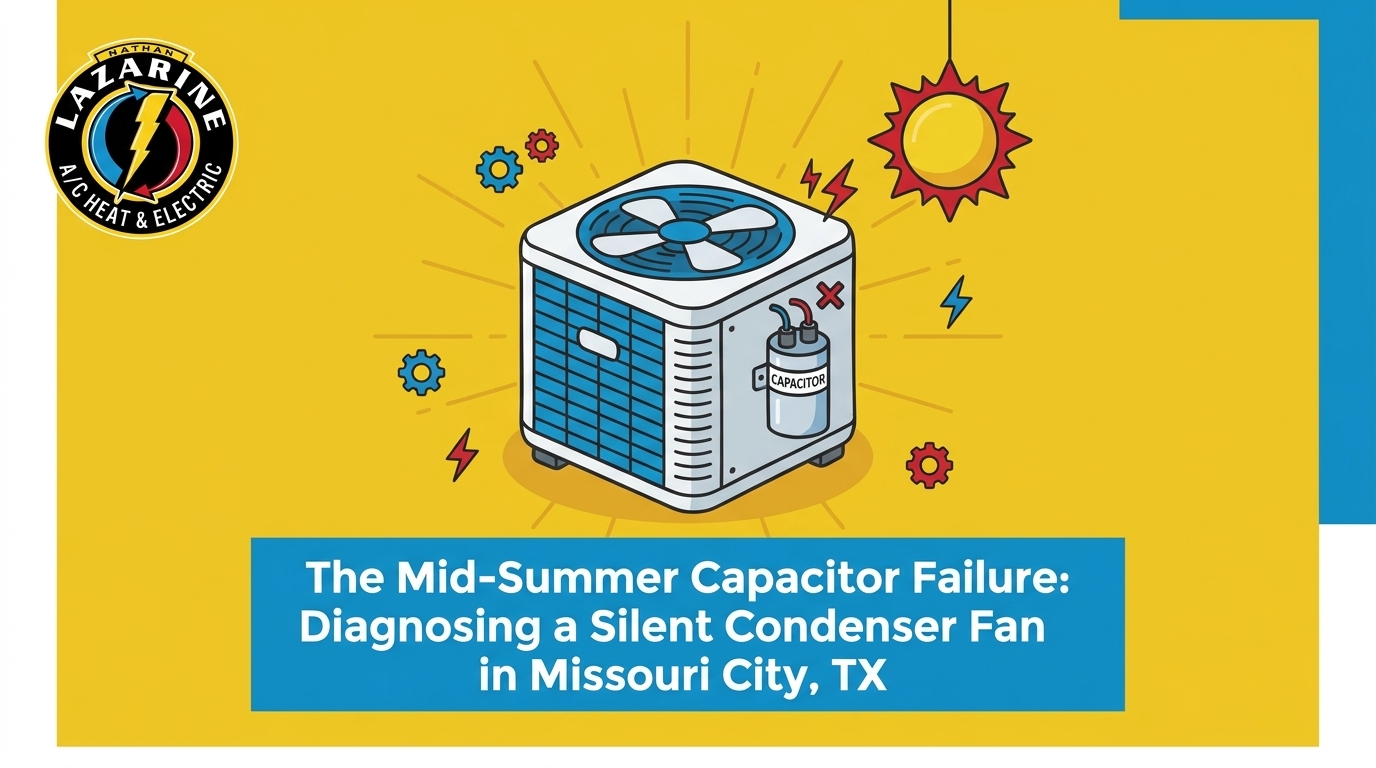
Late August in Texas brings a specific, relentless kind of heat that pushes every mechanical system to its absolute limit. If you are currently dealing with the mid-summer capacitor failure: diagnosing a silent condenser fan in Missouri City usually begins with a very specific, frustrating observation. You walk over to your thermostat, confirm it is set to cool, but notice the indoor vents are only pushing tepid air. When you step outside into the heat to investigate, you find that your AC sounds on but outside fan isn’t spinning. The condenser is emitting a low hum, the metal cabinet is vibrating slightly, but those large fan blades remain completely stationary.
This is the hallmark symptom of late-August heat fatigue taking its toll on a critical electrical component known as the capacitor. After months of continuous, grueling operation through the Texas summer, the compounding effect of daily heat finally overwhelms the part. While losing your cooling during peak temperatures is incredibly stressful, there is immediate reassurance: a silent fan often points to a single, replaceable electrical component rather than a completely destroyed air conditioning system. When this happens, securing reliable AC repair in Missouri City is the fastest way to get your home comfortable again, and understanding your AC fan solutions for homeowners can help you prevent catastrophic secondary damage in the meantime.
Immediate Steps to Take When the Outside AC Fan Stops Spinning
When you discover that your condenser fan has stopped moving while the system is still trying to run, you are in a race against the clock to prevent severe mechanical damage. The compressor, which is the heart of your air conditioning system, relies on that fan to dissipate the massive amounts of heat it generates. Without the fan pulling air across the condenser coils, the compressor will rapidly overheat. Here is exactly what you need to do to protect your system.
- Turn off the thermostat immediately: Do not wait to see if the fan will start on its own. Switch your thermostat from “Cool” to “Off” right away. This stops the system from calling for cooling and cuts the power demand to the outdoor unit.
- Listen for the telltale hum: Before you turn the system off, you likely noticed a distinct humming or buzzing sound coming from the outdoor cabinet. This noise confirms that high-voltage power is successfully reaching the unit, but the motor lacks the electrical torque to actually start spinning.
- Understand the risk of Locked Rotor Amps (LRA): Leaving the system running without a functional fan causes the compressor to draw excessive electrical current, known as locked rotor amps. The compressor is straining to operate under extreme heat and pressure, which can quickly burn out its internal windings.
- Call a licensed HVAC professional: Capacitors store lethal amounts of high-voltage electricity even when the power is shut off at the breaker. You must contact a qualified technician to safely discharge the electrical components and perform the necessary replacements.
Why Immediate Action Saves Your Compressor
The difference between a minor service call and a major system replacement often comes down to how quickly a homeowner turns off their thermostat. A capacitor is a relatively straightforward component to replace. A compressor, however, is one of the most expensive parts of your entire HVAC system. By shutting the unit down the moment you notice the fan is immobile, you are actively saving your compressor from a catastrophic thermal overload.

What Does an AC Capacitor Do During Peak Texas Summers?
To understand why this breakdown happens, it helps to understand the heavy lifting your system requires just to turn on. An AC capacitor is a small, cylindrical component—often resembling a metallic soda can—that stores electrical energy. You can think of it as a highly specialized, incredibly powerful battery designed for rapid discharge. Heavy HVAC components, specifically the compressor and the condenser fan motor, require a massive initial jolt of electricity to overcome inertia and start spinning. Your home’s standard electrical grid cannot provide this sudden spike in power on its own without dimming every light in the house.
The capacitor bridges this gap. A “dual run” capacitor, which is standard in most modern residential units, serves two functions: it sends a high-voltage kick to start the compressor, and it sends a separate kick to start the fan motor. Once the motors are spinning, the run capacitor continues to supply a steady, precisely calibrated voltage to keep them running efficiently. During peak Texas summers, these components are called upon dozens of times a day, discharging and recharging constantly.
Comparing a Healthy System to a Failing One
When investigating the reasons why your AC fan is not spinning, the condition of the capacitor is almost always the first thing a technician checks. The difference in performance is stark.
| Component State | Electrical Output | System Behavior |
|---|---|---|
| Functioning Capacitor | Delivers exact microfarad rating required by the manufacturer. | Fan and compressor start smoothly simultaneously; steady cooling. |
| Weakening Capacitor | Output drops below the required threshold (measured in microfarads). | Hard starts, dimming house lights, fan spins slower than normal. |
| Failed Capacitor | Cannot hold or deliver any electrical charge. | Unit hums, compressor may try to start, fan remains completely silent. |
Why Late-August Heat Fatigue Destroys AC Capacitors
Capacitors are incredibly durable, but they are not invincible. The physics of late-August heat fatigue specifically target the internal structure of these electrical components. Standard HVAC capacitors have strict thermal limits, typically rated to operate safely up to around 158 degrees Fahrenheit. While 158 degrees sounds high, you have to consider the internal microclimate of a metal condenser cabinet sitting outside your home.
On a 100-degree day in Missouri City, direct sunlight beats down on the metal casing of your outdoor unit. Inside that box, the compressor is running relentlessly, generating its own massive amount of mechanical heat. The ambient temperature inside the cabinet can easily soar past the capacitor’s thermal limit. Inside the cylindrical casing of the capacitor is a dielectric fluid—a specialized oil that helps insulate the electrical charge and dissipate heat. Under extreme, prolonged thermal stress, this fluid begins to degrade, boil, and expand.
This expansion creates intense internal pressure. Eventually, the top of the metal casing will swell, bulge outward (often called “doming”), or even burst, leaking the dielectric fluid and instantly killing the component’s ability to hold a charge. This is a cumulative effect. The capacitor doesn’t fail just because it was hot on Tuesday; it fails because it has been running almost continuously for months, absorbing the punishing heat of June and July, until late-August heat fatigue finally breaks it.
Real-World Impact on Missouri City Homes
This exact scenario plays out across the region every late summer. One Missouri City homeowner experienced this firsthand when their air conditioning stopped working on a very hot day. With ambient temperatures soaring well over 100 degrees, the house quickly reached a stifling 91 degrees internally. They noticed the outside unit was humming but the fan was dead. By shutting the system off immediately and calling for help, a technician arrived quickly, replaced the blown electrical component, and completed the repair within an hour. The AC was back up and running, rapidly cooling the house, all because the homeowner recognized the symptom and didn’t force the system to keep running.
Recognizing the Warning Signs Before a Total Breakdown
While a capacitor can sometimes fail instantly, it often gives off subtle warning signs in the days or weeks leading up to a total breakdown. Knowing these symptoms can help you identify signs you need AC repair before you find yourself completely without air conditioning on a Sunday afternoon.
- Distinct humming or clicking: Listen closely to your outdoor unit when the system tries to start. A loud click followed by a heavy, struggling hum usually means the electrical contactor has engaged, but the capacitor cannot deliver the necessary voltage to spin the motors.
- Tepid air from indoor vents: Notice if the air coming from your vents feels slightly warm or less forceful than usual. A weakening capacitor may cause the fan to spin slower, reducing the system’s ability to remove heat from the home before it completely stops cooling.
- Sluggish fan blades: If you happen to be outside when the unit kicks on, observe the fan blades. If they seem to struggle to start, stutter, or spin at a visibly reduced RPM, the capacitor is likely losing its ability to hold a full charge.
The Danger of the “Stick Test”
If you search online forums for a silent condenser fan, you will inevitably find someone recommending the “stick test.” This involves taking a long stick and pushing the fan blades through the metal grate to physically jumpstart the motor. Never attempt this under any circumstances.
First, it is incredibly dangerous. You risk severe physical injury from the heavy metal blades if they catch, and you are poking around high-voltage electrical components. Second, forcing a damaged system to run is the fastest way to destroy it. If the capacitor is dead, the compressor is already drawing dangerous levels of amperage. Jumpstarting the fan forces the system to operate under severe electrical duress, which can rapidly burn out both the fan motor and the compressor, turning a simple part replacement into a total system failure.
How a Licensed Professional Safely Restores Your Cooling
Because capacitors deal with high voltage and store lethal amounts of energy, replacing them is strictly a job for a licensed HVAC professional. The repair process is methodical, prioritizing safety and ensuring no secondary damage has occurred to the rest of the system.
- Safe High-Voltage Discharge: Even with the breaker turned off, a failed capacitor can hold a dangerous electrical charge. Technicians use specialized insulated tools to safely short the terminals and discharge the stored electricity, neutralizing the shock hazard.
- Multimeter Diagnostics: The technician will test the old component using a multimeter set to measure capacitance (microfarads). This confirms definitively that the capacitor is the sole point of failure and that the issue isn’t a seized fan motor or a broken contactor.
- Precision Replacement: A properly sized replacement part is installed. Capacitors are not one-size-fits-all; the new part must match the exact voltage and microfarad ratings required by the manufacturer’s specifications for your specific condensing unit.
- Amp Draw Verification: Once the new part is installed and the system is powered back on, the technician verifies the electrical amp draw of both the compressor and the fan motor. This crucial step ensures that running the system with a dead fan didn’t cause permanent secondary damage to the motor windings.
The Value of Fast, Local Expertise
Another local customer faced an AC unit malfunction where the system simply stopped cooling during a brutal heatwave. Because they relied on a team with a fast local response and a 100% Satisfaction Guarantee, a technician arrived quickly, diagnosed the exact electrical problem, located the necessary part on their fully stocked truck, and promptly fixed the unit. The AC unit was repaired, and the house was cool again within hours. This is why professional intervention is critical—it guarantees the right part is installed safely, restoring your comfort without putting your equipment at risk.
Frequently Asked Questions About AC Capacitors and Silent Condenser Fans
When your system breaks down in the heat of summer, it is natural to have questions. Here are the most common inquiries homeowners have regarding this specific electrical failure.
Why is my AC humming but the fan isn’t spinning?
The humming sound indicates that the electrical contactor has closed and high-voltage power is successfully reaching the outdoor unit. However, the fan motor lacks the necessary electrical torque to start spinning because the capacitor has failed and cannot deliver the required jolt of energy. The system must be turned off at the thermostat immediately to prevent the motor and compressor from burning out while trying to run without a fan.
Can a capacitor go bad from heat alone?
Yes, excessive heat is the absolute leading cause of capacitor failure. Ambient summer temperatures combined with the intense mechanical heat generated by the running system easily exceed the component’s internal thermal limits. This extreme heat causes the internal dielectric fluid to break down, expand, and eventually cause the metal casing to bulge or burst.
What happens if I run my AC with a bad capacitor?
Running the system without a functioning condenser fan causes the compressor to overheat rapidly, as it cannot dissipate the heat it generates. The compressor will draw excessive amperage—known as locked rotor amps—trying to force itself to start and run under strain. This can lead to permanent, catastrophic compressor failure, turning a minor electrical repair into a major, costly system replacement.
How do I know if my AC capacitor is blown?
Visual signs include a swollen, domed, or leaking top on the cylindrical metal casing inside the condenser cabinet. Audible signs include a loud humming or buzzing from the condenser when the thermostat calls for cooling. Functional signs are the most obvious: you will have a completely silent, stationary outdoor fan while the indoor unit continues to blow warm or tepid air.
Is it safe to jumpstart my AC fan with a stick?
No, this is extremely dangerous and highly discouraged by every licensed HVAC professional. Poking a stick through the fan grate risks severe physical injury from the metal blades and exposes you to potential electrical shock. Furthermore, it forces a electrically damaged system to run, which can severely damage the fan motor and completely destroy the compressor.
Restore Your Cooling Safely With Expert Missouri City AC Repair
Dealing with a silent condenser fan in the peak of summer is stressful, but taking the right immediate action protects your home and your wallet. Remember to keep the thermostat switched off until help arrives to save your compressor from fatal heat damage. Because this repair involves high-voltage stored energy, it is critical to rely on a licensed local expert to handle the components safely. Contact our team today for rapid, guaranteed service to beat the late-summer heat, ensuring you get the immediate reassurance and lasting comfort you need to keep your Missouri City home perfectly cool.